iPhone 18 vs iPhone 17: what users actually want, and who delivers it
Should you wait for iPhone 18, or buy an iPhone 17 today? Apple launched the iPhone 18 Pro and Pro Max in September 2026, but the regular iPhone 18 is still only reported for spring 2027: Apple has not announced it.
Meanwhile, the iPhone 17 already answers several complaints users have been raising for years, on the display, storage, battery, and everyday camera. It is real, reviewed, and available refurbished today: check the iPhone 17 on refurbed.
Why smart tech always feels one step behind what you need
New phones rarely invent problems from scratch. Each generation quietly fixes the complaint that got loudest the year before, while a different gap opens up somewhere else. That pattern sits behind almost every Apple release, and it explains why no phone ever feels finished.
Apple did not invent the always-on display, the 120Hz screen, or the wider camera sensor. For years it kept these behind a Pro price tag, while the standard iPhone quietly carried older hardware. iPhone 17 closed that gap, a real achievement, not a marketing trick.
The same pattern shows in the iPhone 18 line. Some of today's complaints, a fragile camera edge, an inconsistent charging port speed, a setup flow that can loop on itself, are the exact kind of gap a new release usually closes. Others simply move to a different corner of the phone. Reading what Apple actually announced, not just the hype, is the only way to tell which is which.
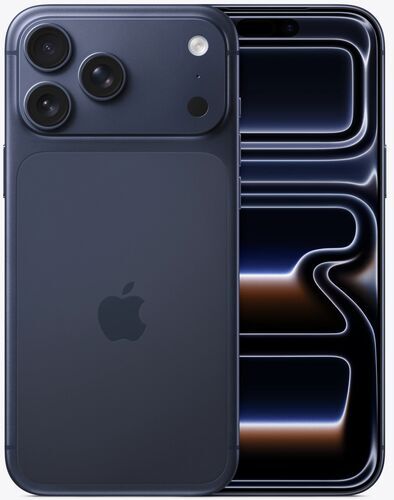
What solutions users are hoping iPhone 18 will deliver
Independent testing found a real weak point on the Pro camera plateau: the anodized coating chips at the sharp edges and exposes bare aluminum underneath. A materials specialist at iFixit traced the cause to the plateau's geometry, not the metal itself, and a smoother curve could have prevented it. Repairing a scratched plateau is also harder than on earlier designs, since the current redesign dropped the easier dual-entry construction.
The USB hierarchy across the current lineup still confuses people: the standard model and the thinnest model are capped at USB 2 speeds of 480Mb/s, while only the Pro models reach USB 3 at 10Gb/s, and the thinnest model skips wired display output entirely. Every model can record large 4K video files, so the speed cap only slows down the people who need faster transfers.
A separate charging bug went further: some iPhone 17 units would accept wireless power but reject a cable entirely once the battery ran nearly flat, looking dead until Apple shipped a fix in iOS 26.5.1.
Setup itself can turn into its own obstacle course. One Apple Community thread, with 82 'me too' votes, describes new phones getting stuck on 'Looking for Nearby Devices' mid transfer, with one user noting the time estimate 'counts up, not down.' Liquid Glass's transparency has drawn its own complaints, with controls blending into busy backgrounds and extra taps needed to find them. Users were hoping iPhone 18 would quietly fix the plateau coating, the port speed gap, the charging-from-flat bug, and the setup flow that traps them mid transfer. Apple's iPhone 18 Pro announcement names none of them.
iPhone 18 Pro: what Apple confirmed in September 2026
Apple's A20 Pro chip is its first built on a 2-nanometre process, the smaller, more efficient manufacturing process the rumors had pointed to. Apple pairs it with its own next-generation C2 modem, which it says uses 15 percent less energy than the C1X and delivers faster uploads.
A 48MP main camera with variable aperture, a first for iPhone, comes on both Pro models, as the component reports had suggested. Apple quotes up to 45 hours of video playback for the Pro Max against 36 for the Pro, and a vapor chamber three times the size of the iPhone 17 Pro's. Apple does not state the amount of memory.
In Germany the iPhone 18 Pro starts at 1,449 euros and the Pro Max at 1,599 euros. Apple's new Siri launched as a beta with iOS 27, but it is not initially available in the EU.
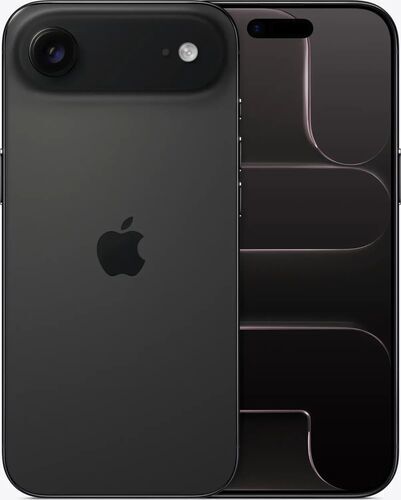
The split iPhone 18 calendar: Pro now, regular model in 2027
The split calendar the reports described came true. The iPhone 18 Pro and Pro Max went on sale on 18 September 2026 and Apple's foldable iPhone Duo on 23 October, while the regular iPhone 18, a more affordable 18e and a second-generation thin model are still reported for spring 2027.
The clearest early evidence came from the camera lens supply chain: a components supplier said a major US customer had postponed a model to the first quarter of 2027, without naming the customer. Headlines that read this as 'no iPhone 18 this year' oversimplified it, since the Pro generation launched in 2026. It is the regular model, the one most people buy, that is still waiting.
For a lot of buyers, the iPhone 18 story is less about a new phone and more about a new release calendar.
What the iPhone 18 line did not bring
The iPhone 18 Pro is no all-screen redesign: most of what changed is inside, plus a smaller Dynamic Island. The fully redesigned phone many expect is still talked about for Apple's next major anniversary generation.
Apple's first foldable, the iPhone Duo, came with the compromises the reports described: Touch ID in the side button instead of Face ID, and a crease that Apple says its matte finish helps hide rather than one that is gone. It starts at 2,299 euros in Germany. Satellite connectivity also still means two different things: a modem that can talk to a satellite for carrier backhaul is not the same as unrestricted broadband beamed directly to every phone.
An iPhone 18 is not required for on-device AI either. Apple previewed its next-generation Siri on iPhone 17 Pro hardware, and Apple Intelligence covers several earlier iPhone generations too.
For the regular iPhone 18, Apple has still announced nothing: no hardware, no name, no price, no launch date.
iPhone 17: the 'finally' iPhone that ended Apple's Pro tollbooth
For years, Apple saved its best display technology for the Pro line and gave the standard iPhone a lesser panel. iPhone 17 changes that: it ships with a 6.3-inch OLED display and an adaptive refresh rate up to 120Hz, features that used to be reserved for the Pro tier, plus an always-on lock screen that shows the time, widgets, and notifications without waking the phone.
Storage doubled too. The base iPhone 17 starts at 256GB, twice the entry storage of the previous generation, at the same launch price. For anyone who has ever deleted photos to free up space before a trip, that alone changes the calculation.
Reviewers noticed. The Verge called it 'the one to get this year.' Engadget scored it 91 out of 100 and called the result 'closer to Pro' than any standard model before it. Business Insider said the smoother scrolling and animation 'operates like butter.' WIRED's reaction to the storage bump: 'high time!' None of this needs an upgrade to Pro pricing. You get it on the iPhone 17, refurbished, right now.
It is not a clean sweep. The base iPhone 17 still has no dedicated telephoto lens, its 2x mode is a digital crop, and it is capped at the same USB 2 port speed flagged above. Even the 'finally' iPhone leaves a few complaints for next time: the same catch-up pattern, just one generation further along.
Center Stage and the N1 chip: iPhone 17's cleverest surprises
The 18MP front camera uses a square sensor, so the phone can reframe a shot for portrait or landscape while you keep holding it the same way. It automatically widens when someone else steps into frame and can record the front and rear camera at once. Business Insider's long-term test called the result 'no one left behind,' since group selfies stop cutting people out at the edge. Think of it as a selfie stick built from software instead of hardware.
A new networking chip turned into a sleeper hit nobody asked for by name. Independent testing over six weeks found the iPhone 17 line delivering up to 40% higher median Wi-Fi upload and download speeds than the previous generation, up to 60% better results in weak-signal spots, and leading download speeds across North America even while supporting narrower 160MHz Wi-Fi channels rather than the newest Wi-Fi standard's full 320MHz width. As one reviewer put it, the win is not 'my phone has a new radio,' it is 'the weak corner of my house seems less weak.' Buy the iPhone 17 refurbished and that networking chip comes standard, not as a Pro exclusive.
iPhone 17 battery and performance that finally close the Pro gap
Apple's A19 chip powers the standard iPhone 17, paired with a 3,692mAh battery. Reviewers testing it over full days consistently got more than six hours of screen-on time, including navigation, streaming, and heavy social media use, without needing a mid afternoon top-up.
The performance gap to the Pro turned out smaller than expected too. Independent benchmark testing found the Pro models only around 10% faster than the standard iPhone 17, which runs its own A19 chip strongly on everyday apps, photography, and most games. Sustained, demanding gaming sessions are the one place it can run warm, since only the iPhone 17 Pro has the vapor chamber cooling to handle that load.
The proof: iPhone 17 became the world's best-selling phone
Reviews are one thing, purchases are another, and the two lined up here. The iPhone 17 lineup outsold the previous generation's equivalent launch window by 14% across the US and China in its first ten days, with standard-model sell-through in China nearly double what the previous generation managed at the same point.
Counterpoint later ranked the standard iPhone 17 the world's best-selling smartphone in the first quarter of 2026, with roughly 6% of the entire global market. Apple's own results for that quarter cited 'extraordinary demand' behind record March-quarter iPhone revenue. Reviewers called it the value pick. Buyers backed that up with their wallets.
None of this makes iPhone 17 perfect. A dedicated telephoto lens, USB 3 transfer speeds, and a smaller phone size are still on plenty of wish lists. But reviewers were relieved by the upgrades it did deliver, then surprised by how well the battery, front camera, and networking held up in daily use, exactly the kind of gap a generation is supposed to close.
Available now: get the iPhone 17 refurbished today
While the regular iPhone 18 is not expected until spring 2027, the iPhone 17 is not a rumor. It is reviewed, best-selling, and sitting in stock today, refurbished, professionally tested, and backed by a warranty and a return window.
Refurbished means checked, cleaned, and reconditioned rather than brand new in the box, and it is hardly distinguishable from new in daily use. Waiting more than a year for a model Apple has not announced is one option. Buying the phone that already solved most of the wish list is the other.
Choose your refurbished iPhone 17 or iPhone 17 Pro
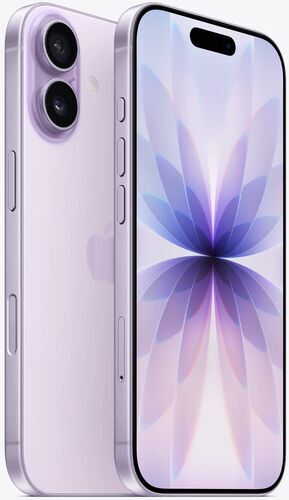
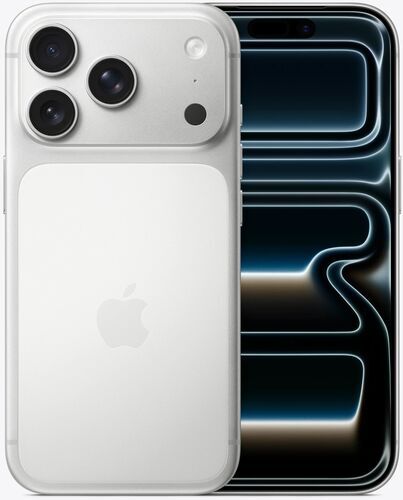
The environmental impact: what the world saves with a refurbished iPhone 17 or 17 Pro
Sustainability numbers are worth citing only when they are exact, so here are the real figures for both models.
Choosing a refurbished iPhone 17 (256 GB) instead of buying new avoids this real environmental impact, compared to a new device.
↓ CO₂ emissions: 70.8 kg CO₂ SAVED (84% less than a new device, equivalent to driving ca. 495.6 km)
↓ Virtual water: 26,494.1 litres SAVED (88% less, equivalent to ca. 177 bathtubs filled with water)
↓ E-waste: 154 g SAVED (78% less than a new device)
↓ Critical raw materials: 39 g SAVED (68% less)
↓ Conflict materials: 1.2 g SAVED (96% less)
Based on scientific research by Fraunhofer Austria, calculation model verified according to ISO 14040/14044 standards.
Choosing a refurbished iPhone 17 Pro (256 GB) instead of buying new avoids this real environmental impact, compared to a new device.
↓ CO₂ emissions: 84.3 kg CO₂ SAVED (86% less than a new device, equivalent to driving ca. 590.1 km)
↓ Virtual water: 31,407.6 litres SAVED (89% less, equivalent to ca. 209 bathtubs filled with water)
↓ E-waste: 182 g SAVED (81% less than a new device)
↓ Critical raw materials: 47 g SAVED (70% less)
↓ Conflict materials: 1.4 g SAVED (96% less)
Based on scientific research by Fraunhofer Austria, calculation model verified according to ISO 14040/14044 standards.
None of this requires waiting for iPhone 18. Both are available refurbished today, backed by a warranty and a return window.
Get your refurbished iPhone 17 or iPhone 17 Pro from refurbed
Every refurbished device on refurbed is professionally tested, cleaned, and reconditioned, and it ships with a minimum 12-month warranty and a 30-day return window.
Compare the iPhone 17 and the iPhone 17 Pro refurbished today, while the regular iPhone 18 is still unannounced and the new iPhone 18 Pro starts at 1,449 euros.

Sign up for our newsletter for the first time and save €15!
Never miss an offer again.
Information about the use of personal data can be found in our Privacy policy.
Get the refurbed app
For iOS and Android


Confirm sign-up
Almost done: We’ve sent you a confirmation email
- © Refurbed Marketplace GmbH
- Accessibility
- T&C
- Privacy Policy
- Imprint
- Legal Notices
- Cookie Policy